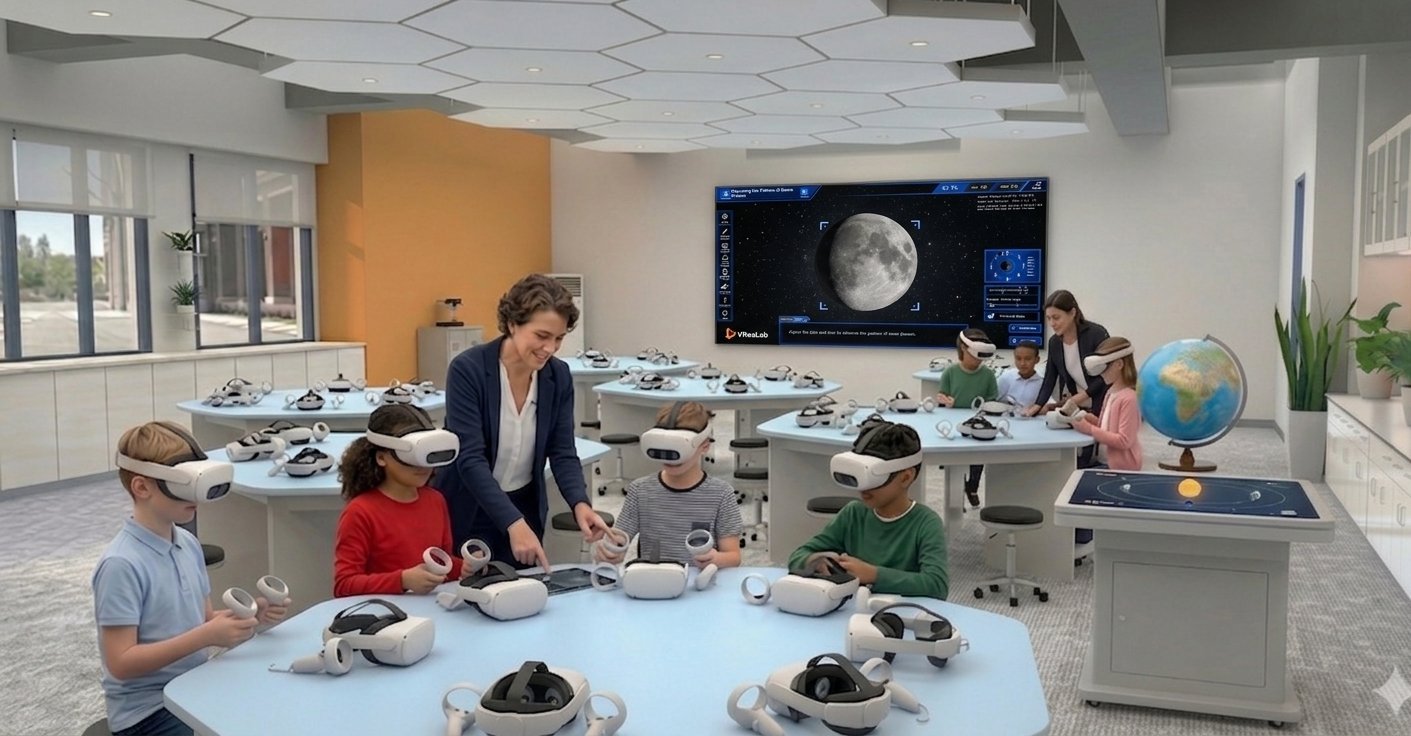
Watching Stars in Class? Primary School Science Virtual Lab Makes Astronomy Tangible
The classic homework assignment — observe the moon phases tonight and share tomorrow — rarely delivers real understanding. Cloudy skies, forgotten observations, and textbook diagrams leave students memorizing shapes instead of grasping causes. A Science Virtual Lab changes everything by bringing the universe into the classroom.
“Class, tonight go home and observe the phases of the moon, then come back tomorrow to share what you saw.”
How well does this classic elementary science homework assignment actually work? Some students look up but see nothing because it is cloudy. Some remember for two nights and then forget. Most simply memorize the pictures in their textbook — “a new moon is a thin line, a full moon is a circle” — without being able to explain why.
Astronomy has always been one of the hardest topics in primary science education. Moon phases, day and night, the causes of seasons, the eight planets of the solar system — these concepts demand strong spatial imagination. Yet in traditional classrooms, teachers can only work with pictures, models, and animated videos. Students can only ‘look’ — they cannot ‘interact.’
Bringing the Universe Into the Classroom
A Science Virtual Lab changes everything.

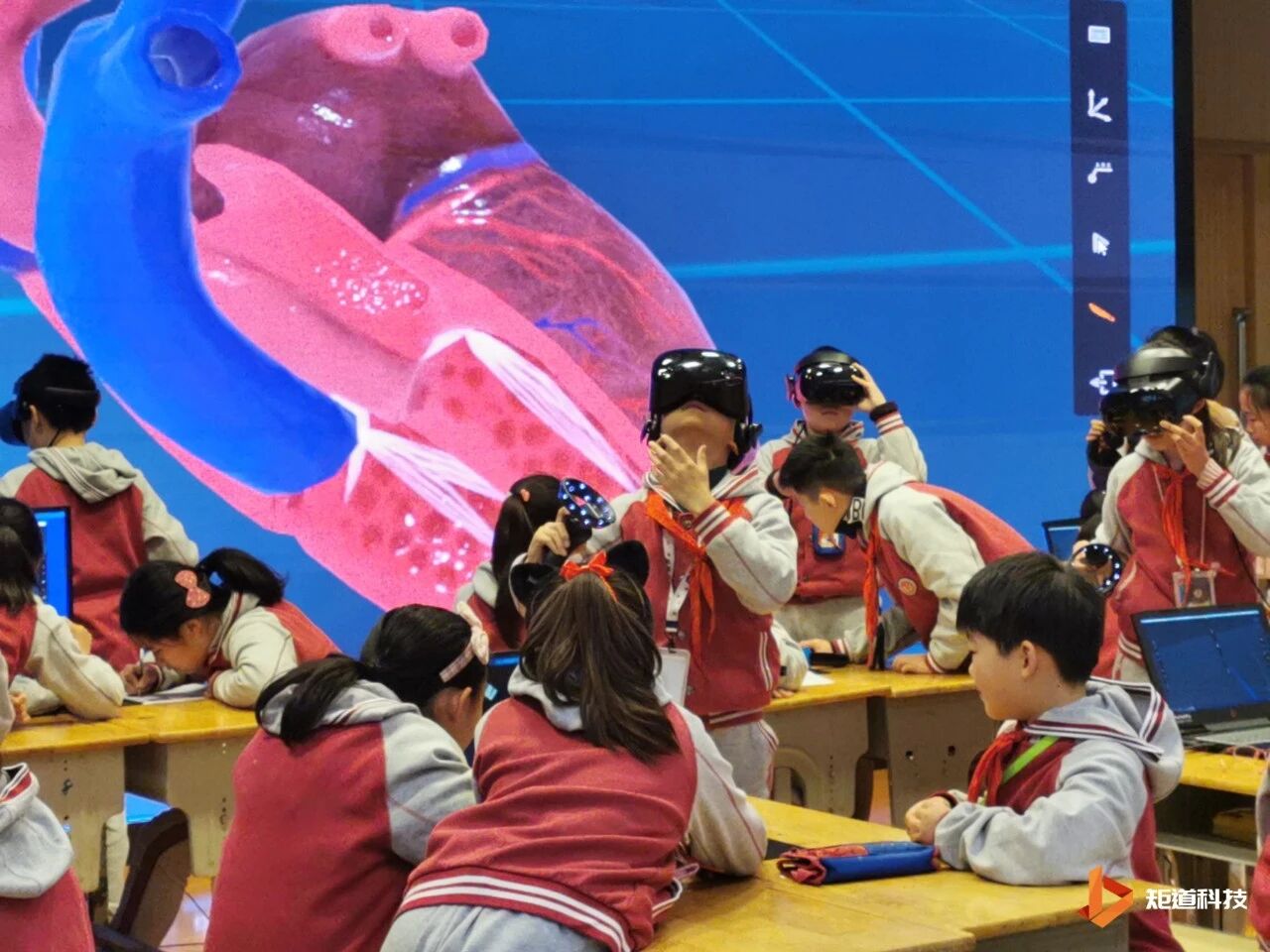
When students open the Earth and Space Science module, they find themselves standing under a star-filled sky. By dragging a timeline, they can watch the moon’s complete cycle from new moon to full moon and back again, unfolding across an entire month. Even better, students can freely switch their observation perspective — gazing up at the stars from Earth, or flying out into space to look down on the Earth-Moon system. Moon phases are no longer a series of static images; they are a dynamic, interactive, three-dimensional process.


This approach directly addresses the core requirements of the Compulsory Education Science Curriculum Standards in the Earth and Space domain — helping students understand the key disciplinary concept of “Earth in the universe” while building spatial reasoning and systems thinking.
In the Solar System lesson, students can freely travel among the eight planets, comparing their sizes, colors, and distances from the Sun. Jupiter’s Great Red Spot, Saturn’s rings, Mars’s red surface — these are no longer just words in a textbook. They become tangible, stereoscopic scenes. This immersive observational experience runs far deeper than memorizing a mnemonic order of the planets.


More Than Just Watching
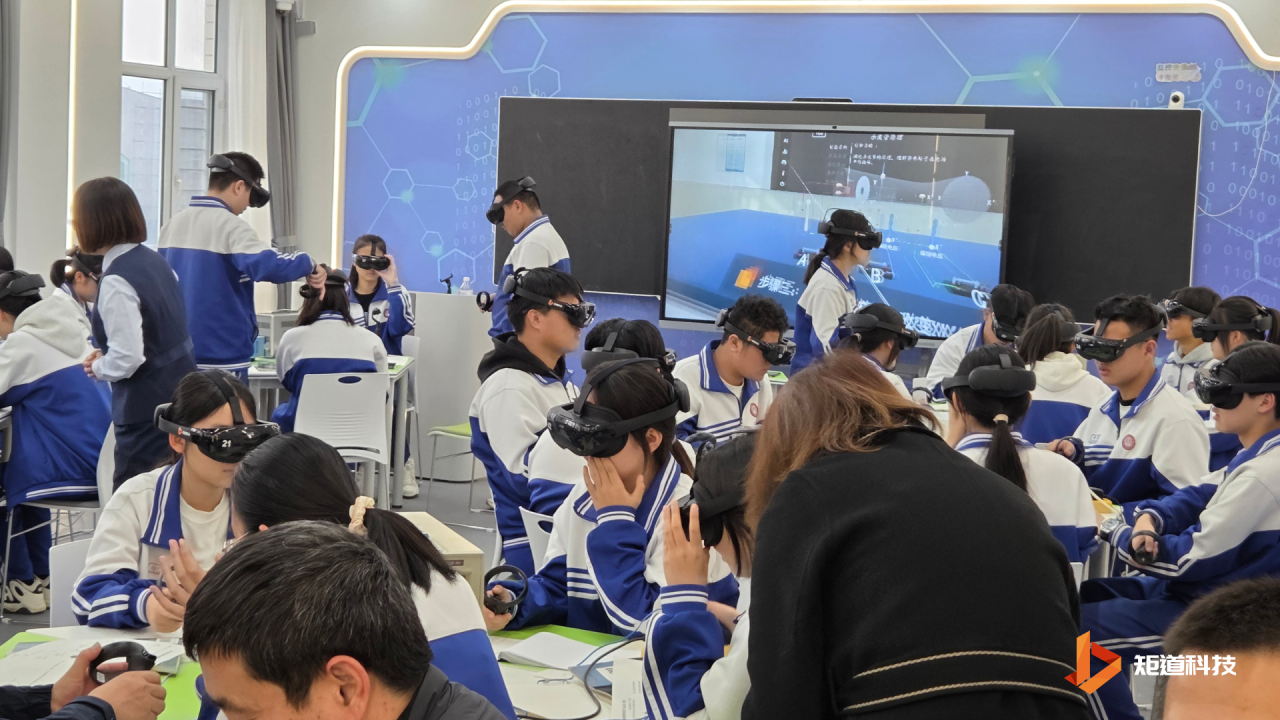
What matters most is that the Science Virtual Lab is not designed to replace the teacher with VR content. Instead, it lets students explore independently in a virtual space. The software includes built-in inquiry tasks — for example, “use the model to discover the pattern of moon phase changes.” Students drag, rotate, and switch perspectives to discover patterns and draw conclusions on their own.

This is exactly the inquiry-based learning that new curriculum standards advocate: instead of the teacher telling students the conclusion, students construct knowledge through firsthand experience. Supported by the Science Virtual Lab, abstract astronomical concepts become perceptible experiences, spatial imagination becomes visual intuition, and passive memorization becomes active exploration — a cornerstone of modern STEM Education.
One science teacher who uses the system put it well: “I used to talk myself hoarse explaining moon phases, and students still only half-understood. Now I let them ‘fly’ out into space and take a look around. When they come back, everything makes sense.”
Technology will not replace teachers, but it can make teaching easier and learning clearer. That is perhaps the greatest change that virtual science resources bring to primary school classrooms.